LK-400 Wire EDM Machine – Stepper Medium-Speed WEDM
The LK-400 Wire EDM Machine is a stepper medium-speed wire cutting model designed for precision machining of electrically conductive workpieces. It features a 740 × 460 mm worktable, 320 × 400 mm worktable travel and a maximum machining thickness of 300 mm.
- Worktable size: 740 × 460 mm
- Worktable travel: 320 × 400 mm
- Maximum machining thickness: 300 mm
- Maximum taper: 6°–30° / 80 mm
- Maximum processing load: 300 kg
- Machine weight: 1500 kg
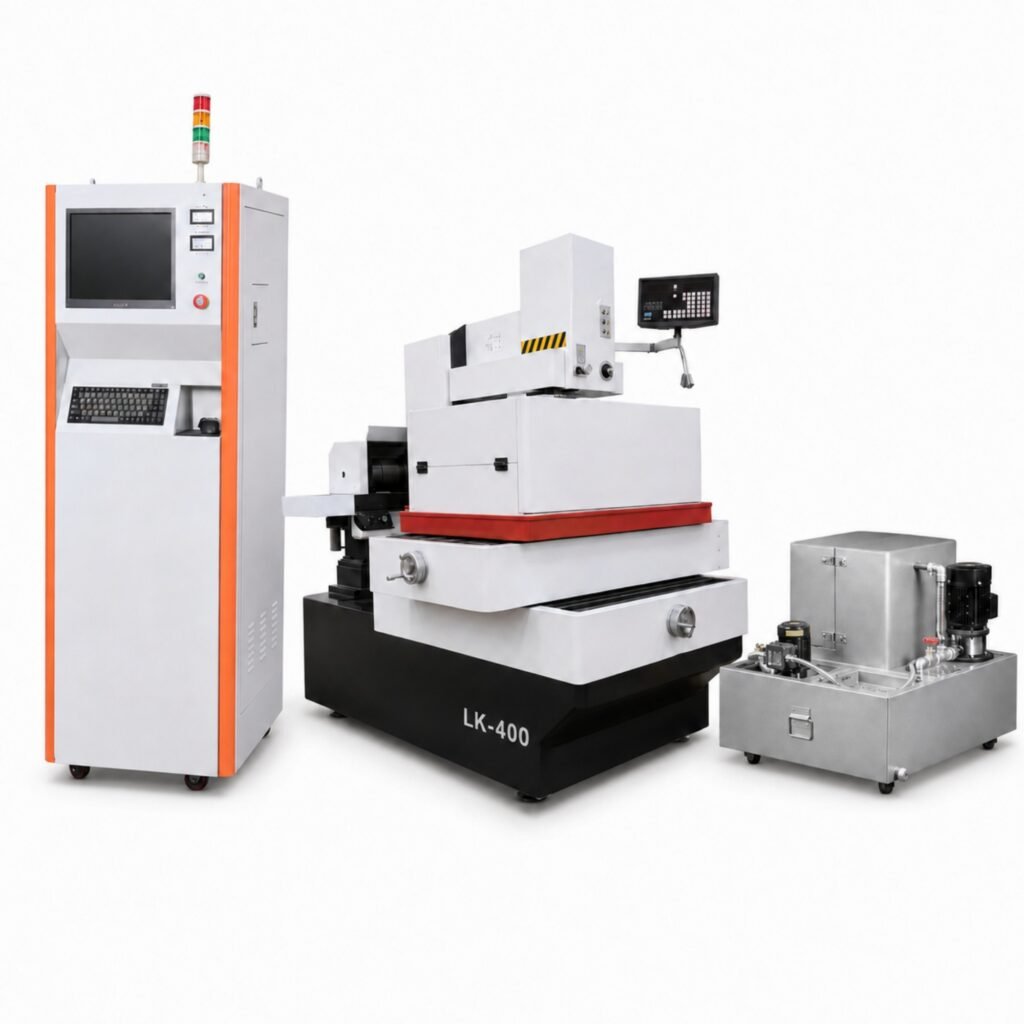
PRODUCT OVERVIEW
LK-400 Wire EDM Machine Overview
The LK-400 Wire EDM Machine is part of the stepper medium-speed Wire EDM range and is designed for general precision wire cutting applications involving electrically conductive materials.
The machine is equipped with a 740 × 460 mm worktable and provides 320 × 400 mm worktable travel. According to the supplied specification, the maximum machining thickness is 300 mm.
For angled cutting requirements, the LK-400 is specified with a maximum taper range of 6°–30° at 80 mm workpiece thickness.
The maximum processing load is 300 kg, while the machine weight is listed at 1500 kg. Its overall dimensions are 1700 × 1300 × 2160 mm.
You can compare the LK-400 with other models in our Wire EDM Machines range or review typical machining uses on our Applications page.
LK-400 Key Data
- 740 × 460 mm worktable
- 320 × 400 mm worktable travel
- 300 mm maximum machining thickness
- 6°–30° / 80 mm maximum taper
- 300 kg maximum processing load
- 1500 kg machine weight
Key Features of the LK-400 Wire EDM Machine
Practical Worktable Size
The 740 × 460 mm worktable provides a practical platform for general Wire EDM cutting applications.
320 × 400 mm Worktable Travel
The LK-400 provides 320 × 400 mm worktable travel for precision profile cutting of suitable conductive workpieces.
300 mm Machining Thickness
The supplied specification lists a maximum machining thickness of 300 mm.
Taper Cutting Capability
The machine supports a maximum taper range of 6°–30° at a specified workpiece thickness of 80 mm.
300 kg Processing Load
The worktable supports a maximum processing load of 300 kg according to the supplied specification.
Compact Machine Footprint
The machine has overall dimensions of 1700 × 1300 × 2160 mm and a listed machine weight of 1500 kg.
LK-400 Wire EDM Machine Technical Specifications
Technical values below are based on the supplied LK-400 stepper medium-speed Wire EDM specification.
| Specification | Unit | LK-400 |
|---|---|---|
| Worktable Size | mm | 740 × 460 |
| Worktable Travel | mm | 320 × 400 |
| Maximum Machining Thickness | mm | 300 |
| Maximum Taper | — | 6°–30° / 80 mm |
| Maximum Processing Load | kg | 300 |
| Machine Weight | kg | 1500 |
| Machine Dimensions (L × W × H) | mm | 1700 × 1300 × 2160 |
Typical LK-400 Applications
The LK-400 can be considered for Wire EDM machining of electrically conductive workpieces where moderate workpiece size, 300 mm machining thickness and taper cutting capability are required.
Mold & Die Components
Wire EDM profile cutting of suitable conductive mold, die and tooling components.
Precision Components
Suitable for conductive parts requiring controlled contours and dimensional machining.
Tooling
Suitable for Wire EDM cutting of tooling, inserts and related conductive components.
Automotive Tooling
Can be considered for suitable conductive tooling and component applications.
Electrical Components
Profile cutting of suitable electrically conductive components.
General Metalworking
Wire EDM cutting of electrically conductive metal workpieces within the available machining capacity.
Suitable Conductive Materials
Wire EDM requires electrically conductive workpiece materials. Actual machining capability depends on material, workpiece dimensions and cutting requirements.
Is the LK-400 Suitable for Your Application?
Compare your machining requirements with the LK-400 capacity.
The LK-400 Wire EDM Machine may be considered when your workpiece size and machining requirements are compatible with its 740 × 460 mm worktable, 320 × 400 mm worktable travel and 300 mm maximum machining thickness.
Before selecting the machine, compare your workpiece dimensions, weight, machining thickness and taper requirements with the listed technical specifications.
- Worktable size requirement within 740 × 460 mm
- Worktable travel requirement within 320 × 400 mm
- Maximum machining thickness requirement within 300 mm
- Maximum processing load requirement within 300 kg
- Taper cutting requirement compatible with 6°–30° / 80 mm specification
If you are unsure which model is suitable, submit your machining requirements through our Request a Quote page.
Compare Stepper Medium-Speed Wire EDM Models
Compare stepper medium-speed Wire EDM models according to worktable size, travel, machining thickness and workpiece load requirements.
LK-400 Wire EDM Machine FAQ
What is the worktable size of the LK-400?
The supplied specification lists a 740 × 460 mm worktable.
What is the worktable travel?
The LK-400 provides 320 × 400 mm worktable travel.
What is the maximum machining thickness?
The maximum machining thickness is specified at 300 mm.
What is the maximum processing load?
The supplied specification lists a maximum processing load of 300 kg.
What is the maximum taper capability?
The supplied specification lists a maximum taper range of 6°–30° at 80 mm workpiece thickness.
What are the overall machine dimensions?
The LK-400 is specified with overall dimensions of 1700 × 1300 × 2160 mm.
Need a Quote for the LK-400?
Send us your workpiece material, dimensions, machining thickness, taper requirements, quantity and destination. We can review whether the LK-400 is suitable for your application and discuss quotation requirements.